Inside vs. Outside Mount: Which Blind Installation Method Is Right for You?
Inside vs. Outside Mount, Defined
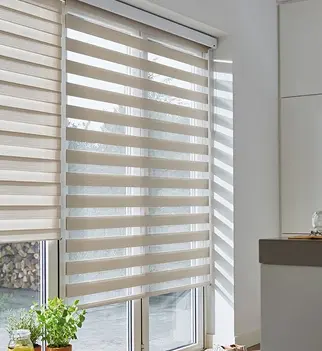
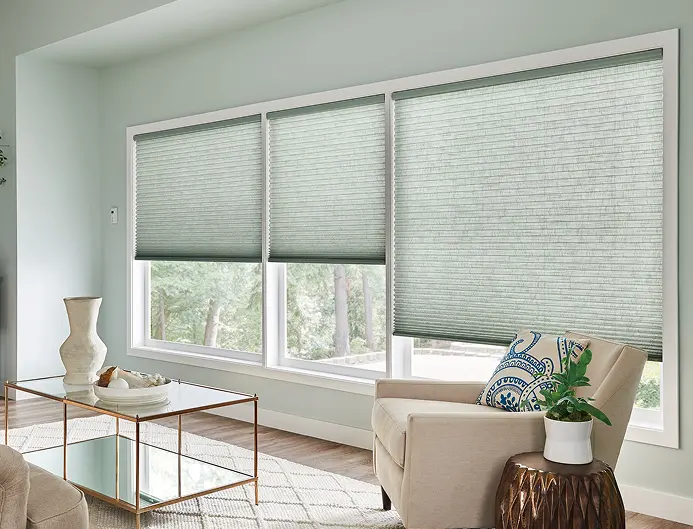
An inside mount sits inside the frame, flush with the opening. An outside mount attaches to the wall or trim around the window and extends past the frame on every side. Simple enough on paper, but the wrong choice shows up later in the light gaps, the privacy, and how the finished room actually reads.
Inside Mount: Pros and Cons
There's something satisfying about a blind that tucks into the window like it was built there. Trim and molding stay visible instead of getting buried, and the whole look reads tailored rather than added on.
The catch is depth. Most blinds need two to three inches of frame depth. Less than that and the hardware doesn't fit, or the blind bows when you try to tilt the slats.
Works best when:
-
The frame is deep enough to clear the headrail and brackets.
-
The window sits near a cabinet or countertop where an outside mount would stick out awkwardly.
-
You want the trim to stay exposed.
Outside Mount: Pros and Cons
This is the fix for whatever an inside mount can't handle. Shallow frame, trim that's seen better days, either one, an outside mount covers it. Because it extends past the opening, it also blocks more light and gives you more privacy at the edges, and it is a good trick for making a small window read as bigger as it is.
Works best when:
-
There's little or no usable frame depth.
-
A crank, handle, or other obstruction is in the way.
-
You want the window to look larger.
-
Full room darkening matters more than a tucked-in look.
What Actually Decides This
Measure the frame depth first. Then check for obstructions: a crank window, an old-style lock, trim that juts out more than expected. The inside mount keeps light gaps small, but only if the depth cooperates. If total darkness matters more to you than a seamless look, outside mount tends to win that argument every time. And ask yourself honestly what you want the window to look like when you're done. Frame showing, or fabric covering the whole thing.
Measuring for Each Mount
The inside mount needs precision. An eighth of an inch matters when you're fitting into a fixed opening, which is why installers subtract a small tolerance from the width for an imperfect frame. Outside mount forgives more, since you're adding overlap rather than squeezing into a box, though you still need enough coverage on every side to keep light from slipping in at the edges. Windows that fall in an awkward in-between spot are usually where custom blinds make the most sense, built to your actual numbers instead of forcing a standard size to cooperate.
Mixing Mount Types in One Home
Most homes end up doing exactly that. A deep-framed living room window might take an inside mount beautifully, and the shallow kitchen window over the sink needs an outside mount to work at all. Match the mount to the window, not to whatever's next to it.
FAQ
1. How much depth does an inside mount need?
Two to three inches of usable frame depth is the rough rule, though the exact figure depends on the headrail size.
2. Which one blocks light better?
Outside mount, hands down, since it extends past the frame and covers the gaps inside mount tends to leave.
3. Can I switch from outside to inside mount later?
Sometimes, if the depth allows it, but expect to buy new hardware and a blind sized for the actual opening.
4. Do outside mount blinds need a frame at all?
No. They attach to the wall or trim, so a window with no real frame still works fine.
5. Is one mount cheaper?
Not really. Any price difference usually comes from the blind itself, not the installation labor.
6. What about a crank or obstruction in the window?
Outside mount wins here almost every time, since it clears the hardware instead of working around it.