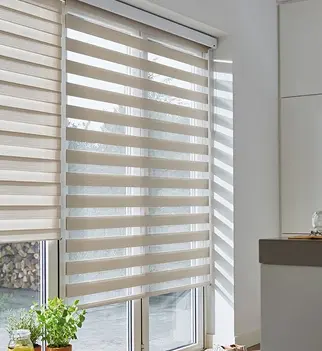
How to Choose the Right Window Treatment for Every Room in Your Home
What to Consider First
Four questions before you touch a fabric swatch. How much light does the room get, and when? Who needs privacy, and from whom? Is there grease or humidity in the air? What actually happens in this room? Those answers tell you more than any catalog will.
Window Treatments by Room
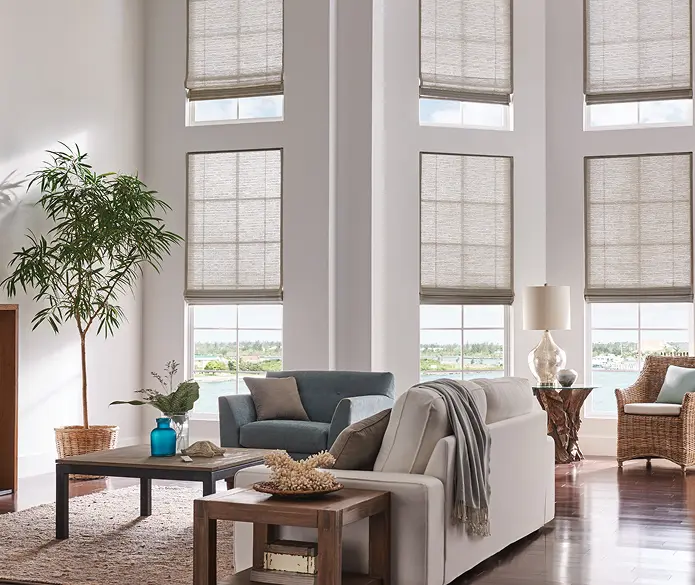
Living Room. This is the room the company sees so that it can handle layers. Drapery adds softness; blinds or shades underneath handle the daytime glare that washes out a TV screen in the afternoon.
Bedroom. Sleep first, everything else second. Cordless designs remove a hazard that trips up more households than you'd think, and you'll want to decide between light-filtering and full blackout depending on how easily a sunbeam ruins your morning.
Kitchen. Grease and steam show up whether you plan for them or not. Faux wood or vinyl, cut short over the sink, wipes clean in a minute and won't warp the way real wood does after a few years of steam.
Bathroom. Privacy and daylight rarely cooperate, except with faux wood, which resists humidity and lets you tilt the slats for airflow without anyone seeing in.
Home Office. Screen glare ruins a workday and looks worse on a video call. Adjustable slats let you dial the light down without going full cave.
Nursery. Cordless hardware isn't a preference; it's a requirement. Blackout shades help protect a nap schedule from a sun that hasn't read the baby's routine.
Blinds Types, Briefly
-
Wood and faux wood bring warmth; faux wood shrugs off moisture better.
-
Roller and solar shades give a clean look and cut UV well.
-
Cellular shades trap air, which provides real insulation.
-
Vertical blinds suit wide windows and sliding doors.
-
Roman shades sit somewhere between blinds and drapery.
Why Custom Blinds Are Worth It
Bay windows and oddly sized panes make off-the-shelf blinds miserable to work with. A custom order is measured to your exact opening, so there's no gap for light to leak through and no slat hanging over the edge. You can also match the color and material to what's already in the room instead of settling for the nearest size on a shelf. It costs more upfront, but the fit usually earns it back.
Bringing It Together
Let function lead and let style follow it. A treatment that keeps a nursery dark, survives a kitchen, or kills office glare does the job, and there's no rule saying it can't look good doing it.
FAQ
1. What's best for a really sunny room?
Solar shades or light-filtering cellular shades. They cut glare without making the room feel shut in.
2. Do custom blinds actually pay off?
For bay windows or anything oddly shaped, usually yes. Standard sizes leave gaps you'll notice every day.
3. What handles humidity best?
Faux wood or vinyl. Real wood warps in a bathroom sooner than most people expect.
4. Can you mix treatments within one room?
Sure, and it's common. Drapery over blinds gives you both the look and the control.
5. What makes a nursery treatment child-safe?
Cordless or fully enclosed cord systems. Loose cords are a real hazard, not a theoretical one.
6. Installation timelines?
Custom orders usually take one to three weeks to arrive, and a professional install runs under an hour.