How to Block Summer UV Rays Without Losing Natural Light: A Window Treatment Guide
Introduction: The Problem With "Natural" Light
Natural light is one of the things people most want in a home. It's also quietly responsible for faded upholstery, bleached flooring, and furniture that looks older than it should.
UV radiation doesn't announce itself. It works slowly, and by the time the damage is obvious, a discolored patch on a sofa, hardwood floors that have lost their richness, artwork that looks washed out, it's already done. Most of it happened on ordinary sunny days when the room just looked bright and pleasant.
The solution isn't to block all the light. It's to filter out the damaging part while keeping the rest. That's what good window treatments actually do.
What UV Rays Do to Interiors
UVA and UVB radiation both cause damage, but in different ways.
UVA penetrates deeper into materials; it's what fades fabric colors, degrades wood finishes, and breaks down upholstery over time. UVB contributes more to surface damage and heat buildup. Neither is visible, and neither announces itself until the damage is already accumulated.
The practical result in an untreated room: furniture fades unevenly, floors lose their depth, and rooms that once felt warm and finished start to look worn. This happens faster in rooms with south- or west-facing windows, which receive stronger, more direct sunlight.
How Window Treatments Handle Light
Window coverings manage sunlight through three mechanisms: reflection, absorption, and diffusion.
Some materials reflect light before it enters the room. Others absorb it and reduce intensity. Diffusion spreads light more evenly, reducing glare while keeping visibility. Most solutions involve some combination of all three; the differences lie in degree and the trade-offs you're making.
Window orientation matters here. A west-facing window in the afternoon gets significantly more intense exposure than a north-facing one. Treatments that work well on one side of a house may underperform on the other.
UV Blocking Blinds: Adjustable and Precise
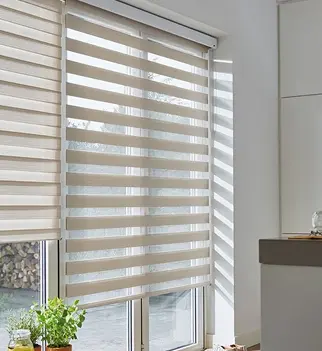
UV blocking blinds use a slatted design that lets you tilt, partially close, or fully shut out incoming light, depending on the time of day or sun angle.
They work well in rooms where you need real control, the ability to manage glare at 3 p.m. without committing to a fully darkened room. They provide strong privacy and solid UV protection when closed, and they're especially useful in bedrooms or home offices where light conditions change depending on what you're doing.
The trade-off is atmosphere. Blinds produce a more structured, segmented light effect. In rooms where you want soft, diffused daylight, such as a living room or a reading nook, fabric-based options can feel harsher.
Solar Shades: UV Protection Without Darkening the Room
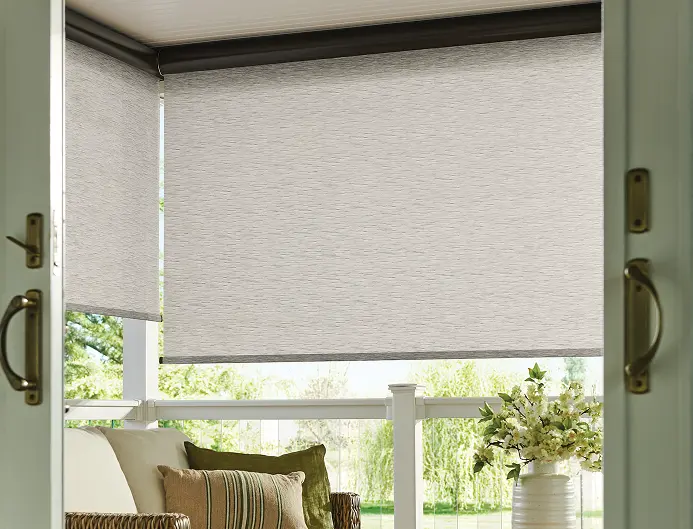
Solar shades are made from finely woven mesh fabric that filters UV radiation while preserving outward visibility and keeping rooms bright. Light passes through but is softened and diffused in the process.
The key variable is the openness factor, the percentage of the weave that's open.
Lower openness (around 1–3%) provides stronger UV protection and better privacy but reduces visibility and incoming light. Higher openness (5–10%) lets in more daylight and maintains clearer views but offers somewhat less UV blocking. Most rooms fall in the 3–5% range, depending on sun exposure and preference.
Solar shades work particularly well in living rooms, dining areas, and open-concept spaces, anywhere you want UV protection without the room feeling closed off.
Blinds vs. Solar Shades: What to Choose
The practical differences come down to how you use the room and what you're optimizing for.
Blinds give you more control over light levels throughout the day. Solar shades provide consistent, soft diffusion with minimal adjustment. Blinds suit rooms where conditions change and you want to respond to them. Solar shades suit rooms where you want a steady, comfortable light level throughout the day.
For UV protection specifically, both perform well. Blinds offer a more complete block of light when fully closed. Solar shades reduce UV significantly while keeping the room visually open.
In practice, many rooms benefit from both solar shades for daytime diffusion, with blinds or heavier drapery layered behind for when you need full control.
Other Options Worth Considering
Cellular shades use a honeycomb structure to trap air, improving insulation and UV filtering, which is useful if energy efficiency is a priority. Roman shades in UV-resistant fabrics combine a softer aesthetic with functional protection. Layered drapery systems, sheer panels for daylight, heavier drapes for privacy, and insulation offer the most flexibility but require more planning to coordinate.
Matching Treatments to Rooms
Living rooms generally do well with solar shades; they maintain brightness, keep the space feeling open, and reduce UV damage to furniture and flooring.
Bedrooms usually need stronger control. UV blocking blinds or a layered system (shades plus blackout drapes) gives you the range to go from bright morning light to full darkness.
Kitchens benefit from treatments that handle heat and are easy to clean. Home offices need glare reduction, specifically screen glare from a west-facing window, which is a daily problem that a solar shade handles much better than a curtain.
Energy Efficiency
By reducing heat gain, UV-filtering window treatments reduce the workload on your cooling system. This is most significant in south- and west-facing rooms during summer, where untreated windows can meaningfully raise indoor temperatures. The energy savings are real, but incremental; the more immediate benefit is comfort, particularly in rooms that get afternoon sun.
Common Mistakes
Choosing based on appearance without considering UV performance. Using a single-layer treatment in a room that would benefit from layering. Ignoring window orientation, applying the same solution to every window in a house, regardless of exposure. And underestimating how quickly UV damage accumulates in rooms that feel bright but receive direct sun for hours each day.
How to Choose
Three questions narrow it down: How much direct sun does the room get, and when? How do you use the space? Do you need adjustable control or consistent soft light? And how much daylight do you want to preserve?
Rooms needing precise control points toward UV blocking blinds. Rooms where brightness matters point toward solar shades. Rooms needing both point toward layering.
How Brilliant Blind Can Help
Brilliant Blind offers UV blocking blinds and solar shades engineered for real-world light conditions — south-facing rooms, afternoon glare, and rooms where you need protection without losing the brightness that makes the space worth being in. If you're not sure which treatment fits your windows, they can walk you through the options based on your specific exposure and priorities.
Conclusion: Filter It, Don't Fight It
Sunlight isn't the problem. Unmanaged sunlight is.
The right window treatments let you keep the brightness you want while blocking the UV radiation that can cause damage to everything inside. That's not a compromise, it's just a better understanding of what light actually does in a room.
FAQ
1. What are UV-blocking blinds?
Window coverings with adjustable slats that reduce UV exposure while giving you control over light levels and privacy throughout the day.
2. Do solar shades completely block UV rays?
No, but they reduce UV significantly, typically blocking 85–99% depending on the openness factor, while keeping rooms visibly bright.
3. Which works better for living rooms: blinds or solar shades?
Solar shades generally suit living rooms better because they diffuse light softly without the structured, segmented effect blinds produce.
4. Can window treatments actually prevent furniture fading?
Yes. UV-filtering treatments slow fading considerably. They won't stop it entirely, but they make a meaningful difference over the years of sun exposure.
5. Is layering window treatments worth it?
In rooms where you want both daytime brightness and strong nighttime privacy or darkness, yes. A solar shade plus a heavier blind or drape gives you more range than either alone.
6. Do UV treatments help with energy costs?
They reduce heat gain, which lowers cooling demand in summer. The effect is most noticeable in rooms with significant south or west exposure.