How Cellular Shades Save Energy in Both Summer and Winter
How Cellular Shades Work: The Science of Trapped Air
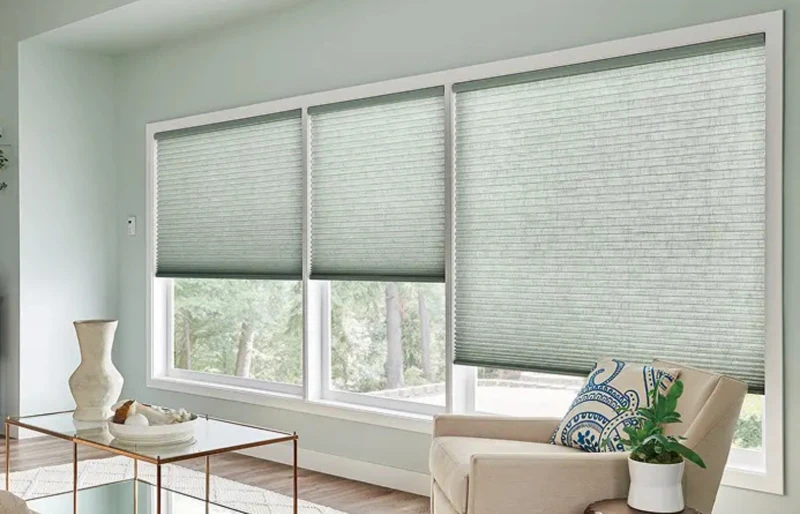
Cut a cellular shade in half and you'd see rows of hexagonal cells running top to bottom, like a paper honeycomb stretched across a window frame. Lower the shade, and each of those cells seals off a small pocket of still air.
Still air is a surprisingly poor conductor of heat, which is why double-pane glass, insulated walls, and a decent winter coat all work. Heat just doesn't move through it quickly. So a cellular shade isn't only blocking light the way a blind does. It's building a buffer zone between the room and the glass, and that buffer doesn't care which direction the heat is trying to travel.
Cellular Shades and Energy Savings in Summer
In summer, the problem is solar heat gain. Sunlight hits the glass, warms it, and keeps radiating that heat into the room long after the sun has moved past the window. A well-fitted cellular shade blocks a good chunk of that heat before it ever reaches the air you're trying to keep cool.
South- and west-facing windows feel this the most, since they catch the most direct afternoon sun. Close the shades during peak hours, and the air conditioner gets an easier afternoon. Blackout fabrics take it a step further. Many carry a reflective lining, Mylar in some cases, a metallic coating in others, that behaves less like a curtain and more like a small radiant barrier bouncing heat back before it settles in.
Cellular Shades and Energy Savings in Winter
Winter flips the mechanism without changing the underlying physics. Instead of blocking radiant heat from coming in, the shade slows conductive heat from going out. Glass is a weak point in most homes, and warm indoor air will happily migrate toward a cold surface if nothing gets in its way.
Trapped air interrupts that transfer. North-facing rooms and older, drafty windows tend to see the biggest difference, since they're losing the most heat to begin with. None of this replaces a furnace. It just takes some of the load off one.
Single Cell vs. Double Cell: Which Insulates Better
Not all cellular shades are built the same, and the difference matters more than the price tag might suggest.
-
Single cell shades use one row of honeycomb pockets. They're lighter, more affordable, and a solid choice for smaller windows or moderate climates.
-
Double cell shades stack two layers of cells, doubling the insulating air pockets. They cost more but deliver a meaningfully stronger thermal barrier, which matters most in large windows or homes that swing between hot summers and cold winters.
-
Cell size also plays a role. Smaller cells, around 3/8 to 9/16 of an inch, suit compact windows. Larger cells, up to 3/4 of an inch or more, are built for bigger openings where more trapped air adds up to more insulation.
For anyone in a climate with real extremes, double-cell is usually the better long-term bet.
Light-Filtering vs. Blackout Fabric for Temperature Control
Fabric is where style and performance pull in slightly different directions, though less than most people assume.
Light-filtering fabric lets in a soft, diffused glow and suits living rooms or kitchens, where you still want some daylight with the shade down. It insulates decently; it just skips the reflective layer blackout fabric adds.
Blackout fabric, with its opaque backing, is the heavier hitter for temperature control. That backing pulls double duty, blocking light for bedrooms and media rooms while reflecting a share of radiant heat away from the glass. On a window that takes brutal afternoon sun, blackout is usually doing more of the actual work than people give it credit for.
Why Custom Window Shades Outperform Off-the-Shelf Options
Here's the part that rarely shows up in a sales pitch: a cellular shade's insulating power comes down almost entirely to fit. A shade that's a half-inch too narrow isn't a cosmetic problem. It's a gap, and gaps let air slip right past the barrier you paid for.
Custom window shades, measured and mounted inside the window frame, close that gap. An inside mount sits flush against the glass and forces air through the cells instead of around them. Outside-mount shades, or anything sized "close enough" off a shelf, tend to leave a strip of unsealed space where the insulating effect just leaks out. If performance is the actual goal and not just how the shade looks, custom measuring isn't optional.
Is the Investment Worth It?
Double cell, blackout, custom-fit shades cost more upfront than a basic mini blind. No argument there. What's worth weighing is the other side of the ledger: lower cooling costs through the hottest months, less heat loss through the coldest ones, and a shade that keeps doing this work quietly in the background every day it's installed. Large windows, older insulation, rooms that swing uncomfortably hot or cold — that's where the payback shows up fastest. A small window that barely sees direct sun probably doesn't need the upgrade. A simpler single-cell shade will do just fine there.
FAQ
1. How much can cellular shades actually save on energy bills?
It depends on climate and how much sun a window gets, but a well-fitted shade cuts both summer heat gain and winter heat loss, and that adds up over a full year.
2. Do cellular shades work better in summer or winter?
Both, just through different mechanisms. Summer relies on blocking radiant heat before it gets in; winter relies on slowing conductive heat loss on the way out.
3. What's the difference between single-cell and double-cell shades?
Double cell stacks two layers of honeycomb pockets instead of one, roughly doubling the trapped air. It's the better call for large windows or a climate with real extremes.
4. Does inside mount really make a difference in performance?
Yes, more than most people expect. An inside mount sits close to the glass with barely any gap, so air has to pass through the shade instead of sneaking around it.
5. Are blackout cellular shades better for energy savings than light-filtering?
Usually, thanks to the reflective lining, especially on windows that take a lot of direct sun. Light-filtering still insulates reasonably well and makes more sense where daylight matters.
6. Which rooms benefit most from cellular shades?
South- and west-facing rooms see the bigger summer win from blocked solar heat. North-facing rooms and older, drafty windows see the bigger winter win from reduced heat loss.