Fall Window Styling: Warm Tones and Textures in Drapery and Blinds
Why Fall Calls for a Window Treatment Refresh
A window's job changes once the temperature drops. In July it's mostly managing glare. By November it's the weak point where a draft sneaks in. Heavier fabrics and layered treatments handle the practical side of that, but the color and texture shift is what actually makes a room read as "fall" instead of just "less bright."
Warm Color Palettes for Fall Drapery
Treat the fall palette like a spice rack: a little goes a long way. Rust, terracotta, olive, cinnamon, and camel all read warm without shouting, and they sit comfortably against neutral walls or furniture you already own. If you want something bolder, an emerald or burgundy drapery panel brings real drama to a dining room or study. Custom drapery is worth the extra step here, mostly because it's nearly impossible to find these exact tones sitting on a shelf.
Textures That Add Warmth
Color sets the mood. Texture is what actually sells it. A few options worth considering:
-
Velvet for a plush, light-catching drape in a living room or bedroom
-
Brushed cotton or heavier linen for something softer and more relaxed that still holds warmth
-
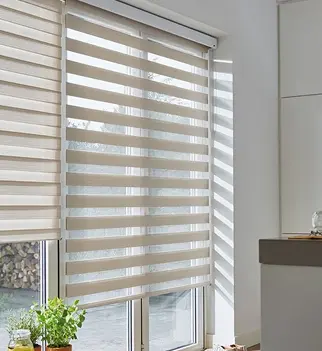
Woven wood shades for an earthy layer underneath fabric panels
None of these are purely decorative choices. They also outperform the lightweight fabrics you had up all summer.
Layering Drapery Over Blinds and Shades
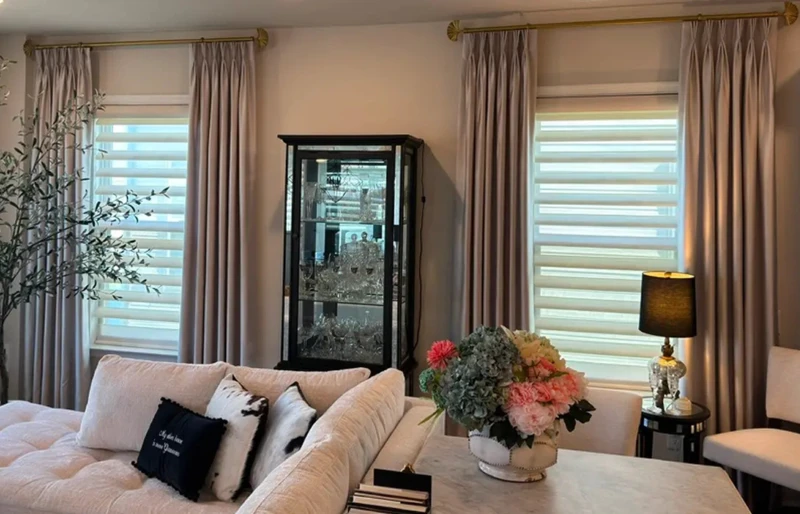
If there's one habit fall decorators repeat every year, it's layering. Hang custom drapery over blinds or woven shades that are already there, and you get a depth no single treatment manages on its own — plus a room that can adjust as daylight gets shorter. Even panels that never actually close still add a softness an empty window frame can't fake.
Drapery Hardware That Pulls the Room Together
Hardware is the part people forget about, and it shouldn't be. A rod, its rings, and the finial on the end are doing more work than they get credit for. Swap a plain white rod for matte black or warm brass and the whole window looks intentional. A wood-tone rod pairs naturally with woven shades underneath it. Even something as small as a tieback in a contrasting texture is the difference between "custom" and "off the rack."
Room-by-Room Styling Ideas
A heavier velvet panel over a Roman shade turns a living room window into the kind of spot people gravitate toward without thinking about why. In a bedroom, brushed cotton drapery with a blackout lining covers the mood and the practical need for darker mornings. An entryway usually just needs one thing: a woven wood shade dressed up with a single warm-toned valance.
FAQ
1. What colors are trending for fall window treatments?
Warm neutrals rust, terracotta, camel, olive form the base, with jewel tones like emerald or burgundy showing up as accents in more formal rooms.
2. Can I layer drapery over blinds I already have?
Yes, and it's one of the easiest upgrades available. Custom drapery over an existing blind or shade adds warmth and texture without touching what's already installed.
3. What fabric holds up best for fall insulation?
Velvet, brushed cotton, and lined linen all add real thermal value compared to whatever lightweight fabric was up for summer.
4. Does drapery hardware really make a difference in the finished look?
More than people expect. The rod and finial frame the fabric the same way a frame changes how a painting reads, and mismatched hardware can drag down an otherwise good drapery choice.
5. How do I choose between custom drapery and ready-made panels?
Lean custom when the window is a focal point; it's the only way to get exact color, proper fullness, and a length that doesn't pool or float above the floor.
6. How often should I update my window treatments seasonally?
It rarely requires a full replacement. A new valence, an added layer, or different hardware is usually enough to shift the whole mood.